A place to grow.
And to keep coming back.
The ambition is continuity: age-appropriate spaces, enduring relationships and new opportunities as a child becomes a young adult.
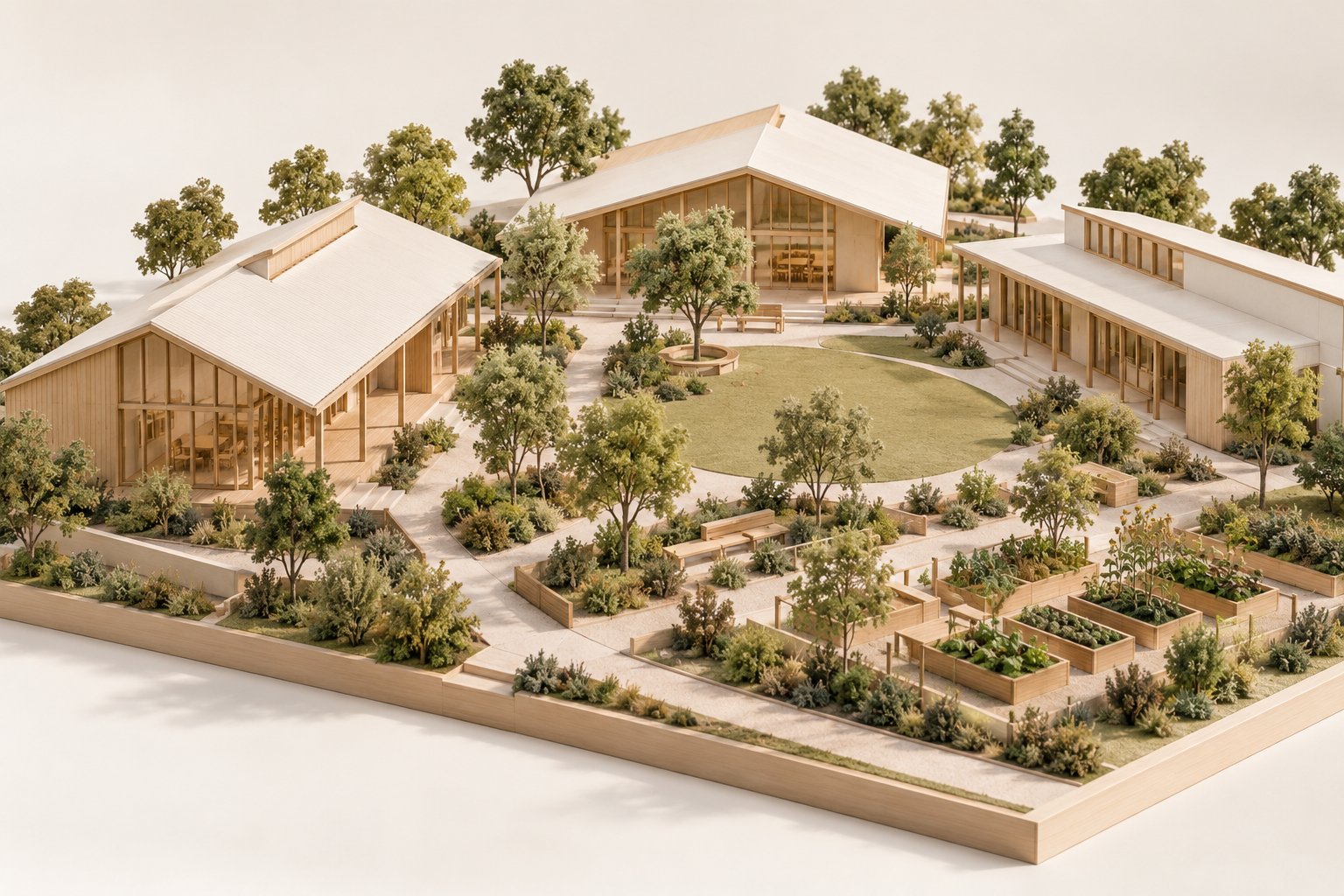
One Campus. Multiple Stages of Development.
Conceptual organization based on your vision — not a finalized architectural plan
Early Childhood Development Center
Infants through preschool, including your four-year-old classrooms
Spacious classrooms, developmental continuity, consistent teachers and high-quality care
School-Age / After-School Center
Elementary school years, through approximately age 12
A separate facility on the same campus, maintaining children's connections as they progress through school
Youth Development & Vocational Center
Approximately ages 13–19
Hands-on skills, vocational training, mentorship, and exploration of individual interests
Each facility has its own age-appropriate space while belonging to the larger Good Ground campus.
More than a collection of buildings.
A campus can put different stages of life within reach of one another. The deeper ambition is that a child would not lose every familiar relationship each time they enter a new age group.
The founder imagines this work continuing long enough for children who once attended to return as parents—and, eventually, as grandparents whose grandchildren attend. That is a generational aspiration, not an outcome we can claim today.
Continuity must still respect each stage. Infants, elementary-age children and teenagers need different spaces, supervision, activities and responsibilities.
Interests become real through experience.
Gardening & living systems
A proposed garden could connect observation, seasons, food and shared care. Accessibility, weather, tools and supervision would be part of its design.
Making & practical skills
Woodworking and other forms of making could give young people a chance to plan, measure, revise and complete something useful, with age-appropriate equipment and instruction.
Technology & enterprise
Future experiences could introduce digital tools, problem-solving and the work behind a small business. Exploration would not be sold as a guaranteed career pathway.
Mentorship & education
A dependable adult can make room for questions, feedback and a next step. Any proposed mentoring activity would require clear responsibilities, appropriate safeguards and consistent support.
Before a campus can open.
Land and facilities, feasibility, capital and operating funding, qualified staff, relevant approvals and program readiness all need to be established. No site, opening schedule, enrollment place or service availability is promised here.
The next meaningful progress will be documented as work is completed—not implied by a conceptual illustration or a hopeful date.
Follow the roadmapHelp turn a long view into practical work.
Bring your experience, your organization, or a practical idea. Help shape work that can last.
Explore ways to get involved