The campus vision is about continuity across childhood and youth—and an institution that could serve more than one generation.
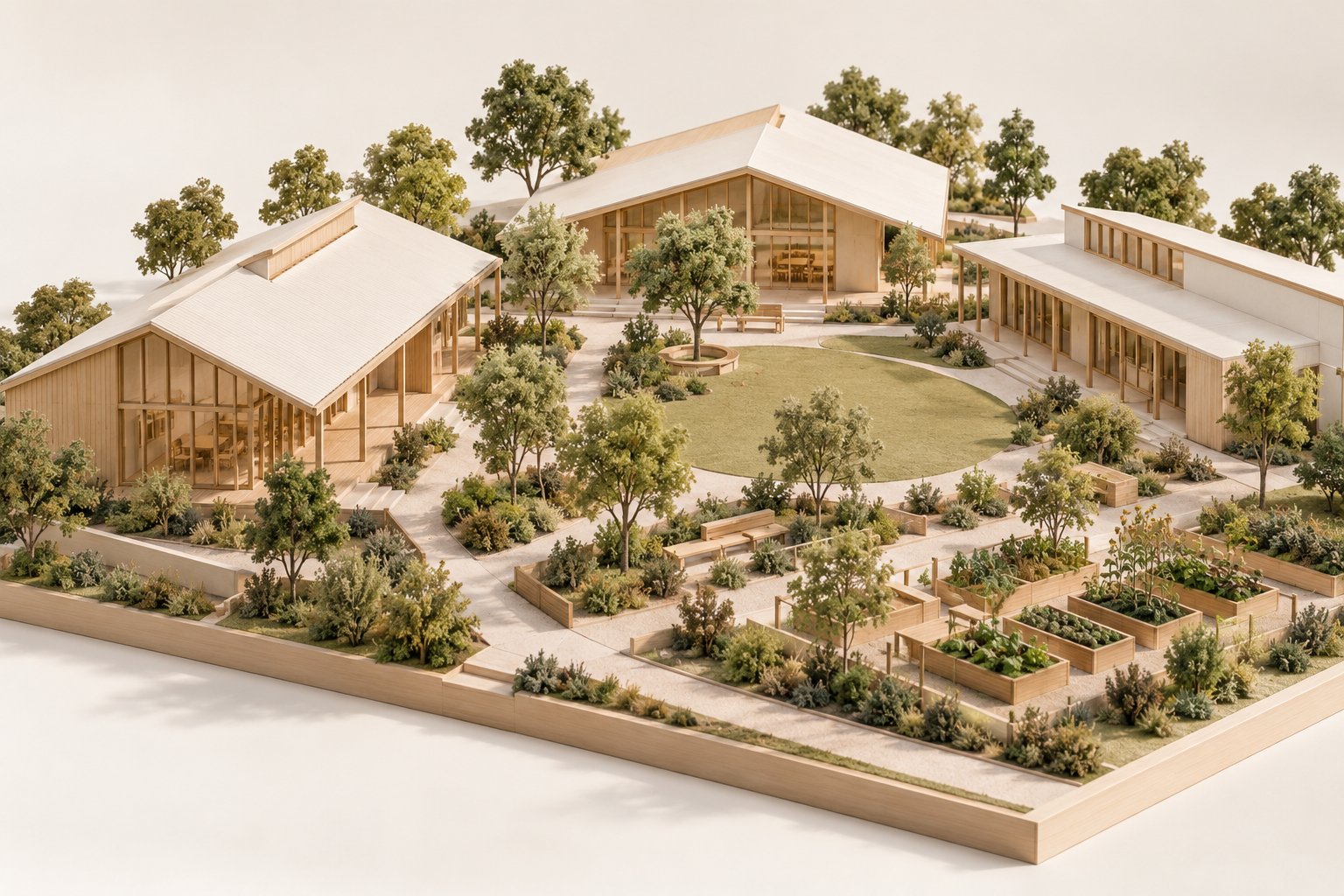
One Campus. Multiple Stages of Development.
Conceptual organization based on your vision — not a finalized architectural plan
Early Childhood Development Center
Infants through preschool, including your four-year-old classrooms
Spacious classrooms, developmental continuity, consistent teachers and high-quality care
School-Age / After-School Center
Elementary school years, through approximately age 12
A separate facility on the same campus, maintaining children’s connections as they progress through school
Youth Development & Vocational Center
Approximately ages 13–19
Hands-on skills, vocational training, mentorship, and exploration of individual interests
Each facility has its own age-appropriate space while belonging to the larger Good Ground campus.
A child’s life does not reset when a program’s age bracket ends. Interests, relationships and experiences continue, even when the next service sits in a different place or uses a different name.
The Good Ground Campus vision begins with that continuity. It proposes age-appropriate spaces for early childhood, school-age and after-school experiences, and youth development within a larger campus. The ambition is to allow opportunities and relationships to develop as children grow.
The campus is a future development. It is not an operating facility, an approved architectural site or an enrollment offer. The approved conceptual passage below describes the vision; it does not announce a completed plan.
Separate spaces within a larger place
Different stages of development require different settings. An infant’s environment is not a teenager’s workshop. A campus should not erase those differences in the name of continuity.
The concept instead places distinct age-appropriate facilities within a larger relationship. The practical meaning would have to be worked out through qualified planning, staffing, safeguarding and program design.
Proximity alone would not create continuing relationships. The institution would need to decide how transitions work, what information should appropriately follow a participant and who is responsible at each stage.
A child can discover more than one interest
The youth-development vision includes hands-on skills, vocational exploration and mentorship. Proposed possibilities include gardening, woodworking, technology and entrepreneurship. These are directions for future development, not current course offerings or promised credentials.
The purpose would be to give young people meaningful encounters with different forms of work and learning. An introduction should allow someone to discover an interest without forcing a career identity onto it.
A practical activity can lead to another question, a deeper project or a decision to explore something else. That freedom is part of what makes an opportunity useful.
The multigenerational ambition
The founder imagines the campus continuing long enough for an infant who once attended to become a parent, and later a grandparent whose grandchildren also attend. This is a statement about the institution he hopes to build, not a claim of existing generations served.
Such an ambition changes the planning question. It is not enough to ask what would open the first facility. The work must consider leadership, financial resources, maintenance, program quality and the ability to adapt over time.
A lasting institution cannot depend entirely on one person’s energy. It needs responsibilities and capabilities that can continue as people and circumstances change.
Resources and readiness belong together
The approved 70% net-profit mission commitment is part of Good Ground’s financial direction. It does not establish that a campus budget is available or that construction can begin.
Feasibility, suitable land or facilities, capital and operating resources, qualified staff and relevant approvals all need attention. These are not ceremonial steps after the vision is settled. They may change what is practical and how the work should develop.
The roadmap therefore describes stages rather than an invented opening calendar. A credible date should follow readiness, not be used to create the appearance of it.
An invitation to contribute to the real work
People and organizations may have knowledge that helps clarify the vision: early-childhood expertise, educational design, facilities experience, practical skills, research or financial planning. A useful contribution begins with a defined need and an appropriate agreement.
No public campus enrollment or direct mentoring placement is offered through this article. The immediate opportunity is to understand the direction and consider what capability could help the planning become more informed.
The campus should eventually be judged by the experience it makes possible for children, families and staff. At this stage, the responsibility is to describe it honestly, develop it carefully and preserve the long view that gave the idea its purpose.
Sources & context
Good Ground company perspective, based on the founder’s approved October 31, 2026 direction and company records. Future activities are described as plans, not operating programs.
Published by Good Ground. This article distinguishes reported evidence from our interpretation and proposed work. Read our editorial standards.